
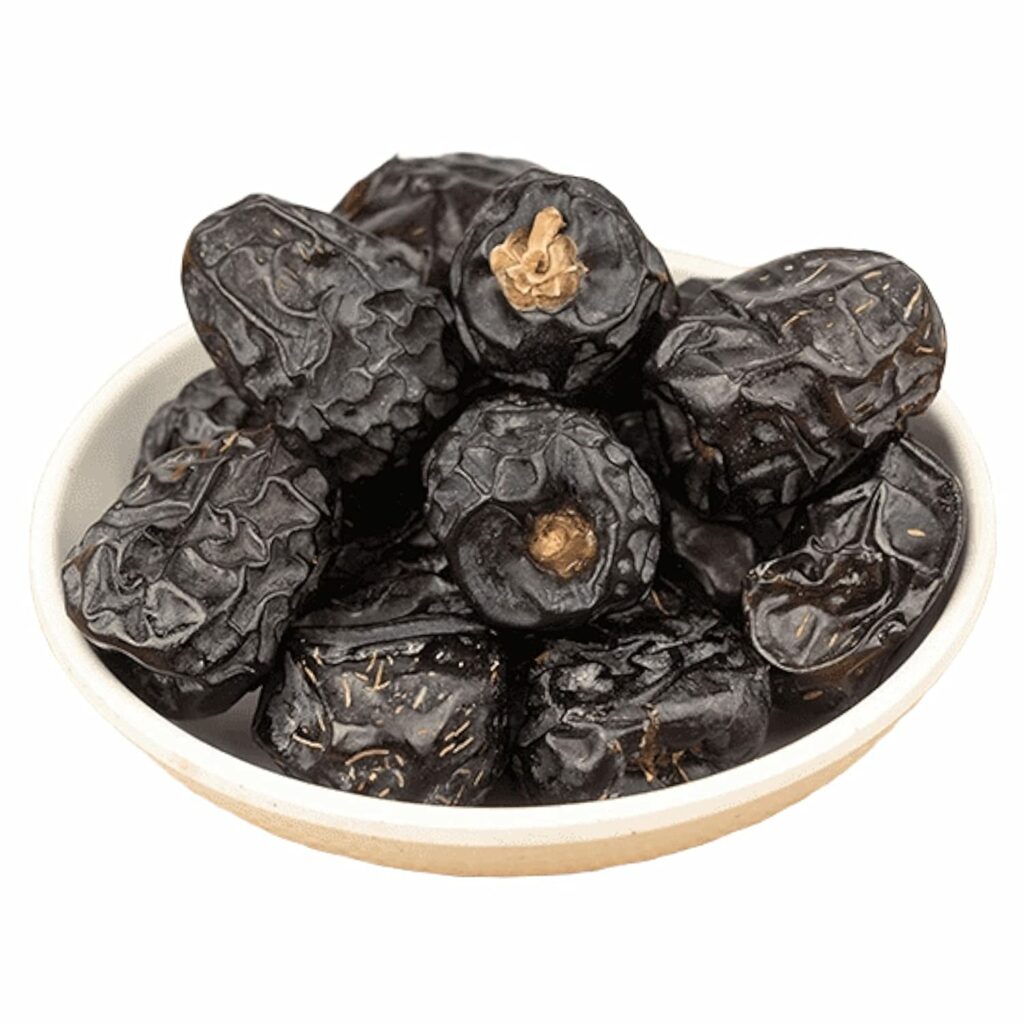
A 1kg pack of kurma Ajwa is a handy size: dates for iftar at home, a gift for someone back from umrah, or a dish on the table at a kenduri. Every date sold in Malaysia is imported, and Ajwa is no exception. It comes from Madinah in Saudi Arabia. So when the title of this page calls Ajwa the finest of the dates sold in Malaysia, the honest follow-up is: finest by what measure? Below are the parts you can actually check before you pay a kurma supplier for a 1kg pack: what Ajwa is, what the grade letters mean, what 1kg costs on a real price list, and how to read the label.
What kurma Ajwa is
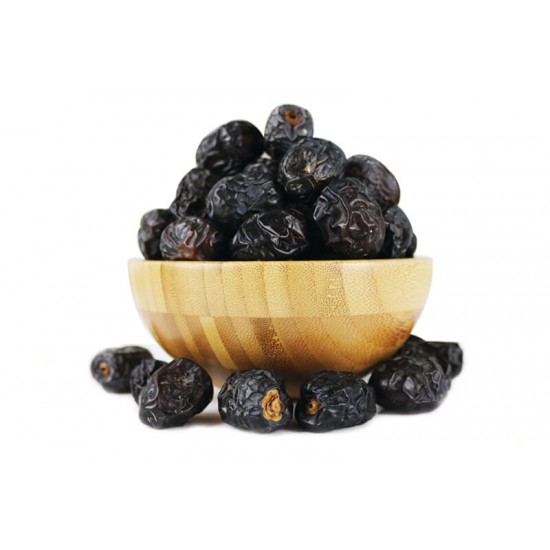
Ajwa is a small, roundish date. It is near-black, with finely wrinkled skin, and it is soft. It is not a firm or meaty date, so a pack described that way is describing something else. The origin to look for on the label is Madinah, Saudi Arabia.
In Malaysia you will also see it sold as Kurma Nabi. That is a market name for Ajwa, not a separate variety. Safawi and Mabroom also come from the Madinah region, but they are different dates: Safawi is longer than Ajwa, dark brown to black, soft and chewy, while Mabroom is long, slender, reddish-brown and semi-dry.
Ajwa is named in a hadith. Sahih al-Bukhari 5445, narrated by Sa'd, reports that the Messenger of Allah (ﷺ) said: "He who eats seven 'Ajwa dates every morning, will not be affected by poison or magic on the day he eats them." That is the text as sunnah.com gives it in English. This page quotes it and adds nothing to it.
Is Ajwa the finest? What the price list says
"Finest" is a matter of taste. Price is easier to pin down. The figures below come from one Malaysian wholesaler's online list, checked in November 2026. They are a snapshot, not the going rate everywhere, but they let you compare Ajwa 1kg with the 1kg packs of other varieties on the same day.
| 1kg pack (name as listed) | Price | Stock on the day |
|---|---|---|
| Ajwa A | RM31 | In stock |
| Ajwa AA | RM36 | In stock |
| Ajwa AAA VIP (Large) | RM44 | In stock |
| Ajwa VVIP Jumbo | RM55 | Out of stock |
| Safawi A | RM35 | In stock |
| Safawi AAA Jumbo | RM45 | In stock |
| Mariami AAA | RM40 | In stock |
| Medjool Jumbo, 900g box | RM70 (about RM77.78 a kilo) | In stock |
Two things are worth noticing. The cheapest 1kg Ajwa, grade A at RM31, costs less than the cheapest 1kg Safawi at RM35. And the 900g Medjool box costs more per kilo than any 1kg Ajwa on the list. So Ajwa is not automatically the most expensive date you can buy. If someone tells you a pack is dear "because it is Ajwa", look at the grade first.
Grade letters on a 1kg Ajwa pack
A, AA, AAA and Jumbo are not an international standard. They are each importer's own size sorting. An AA from one kurma supplier need not match an AA from another, which is why comparing letters between two shops tells you very little.
Within one list, though, the letters do line up with price. On the list above, 1kg Ajwa climbs from RM31 for A to RM36 for AA and RM44 for AAA VIP, which also carries the word "Large" in its name. The VVIP Jumbo pack, at RM55, was out of stock when checked.
The practical check is the scale. Count ten dates, weigh them, and compare the weight between grades or between suppliers. This site has a step-by-step guide to weighing ten dates before you pay, written for Medjool, and the same idea works for an Ajwa pack.
1kg or 5kg: working out the price per kilo
A 1kg pack is easy to store and easy to give away. A 5kg pack is for a big kenduri, a shop or a family that eats a lot of dates. On the same list, two 5kg Ajwa packs were in stock:
| Ajwa 5kg pack (name as listed) | Pack price | Price per kilo |
|---|---|---|
| Ajwa Premium A No.1 (Small) | RM115 | RM23.00 |
| Ajwa Premium VIP AAA | RM175 | RM35.00 |
Set those against the 1kg packs. The 5kg VIP AAA works out at RM35 a kilo, while the 1kg AAA VIP (Large) is RM44. The names are close but not identical, so ask the seller whether they are the same sorting before you treat it as the same date for less money. The same goes for the 5kg "A No.1 (Small)" and the 1kg "A".
Several other 5kg Ajwa packs were on the list but out of stock that day: A No.2 (Mini) at RM95, AA at RM145, VVIP Jumbo at RM215, a second VIP AAA listing at RM231 and XL Super Jumbo at RM370. A smaller-pack option, 24 pouches of 200g at RM221, was out of stock too. Stock changes, so a price you saw last month may belong to a pack that has since sold out.
For a longer walk through 5kg pack lists across several varieties, see this site's guide to reading a pack list and choosing a supplier (in Malay).
What the label on a 1kg pack should tell you
The FAO's handbook on date palm cultivation (Plant Production Paper 156) says that in most importing countries the law demands that data such as weight, country of origin, quality and date of expiry appear on the package. Use that as your checklist. A 1kg Ajwa pack should name Madinah or Saudi Arabia as the origin, state the net weight, show a grade or quality line, and carry an expiry date.
The same handbook lists the aims of date packing. One of them is to protect the fruit and prevent further drying out, or loss of moisture in moist fruit. Ajwa is a soft date, so a torn or badly sealed pack is a reason to ask questions. Once you open it at home, keep the rest sealed.
For long-term storage, the handbook says the temperature commonly used for several varieties including Medjool is -18 °C. It does not name Ajwa there, so treat that as a general note rather than an Ajwa rule. For a 1kg pack you plan to finish within the Ramadan month, a sealed container is the simpler answer.
When people buy Ajwa
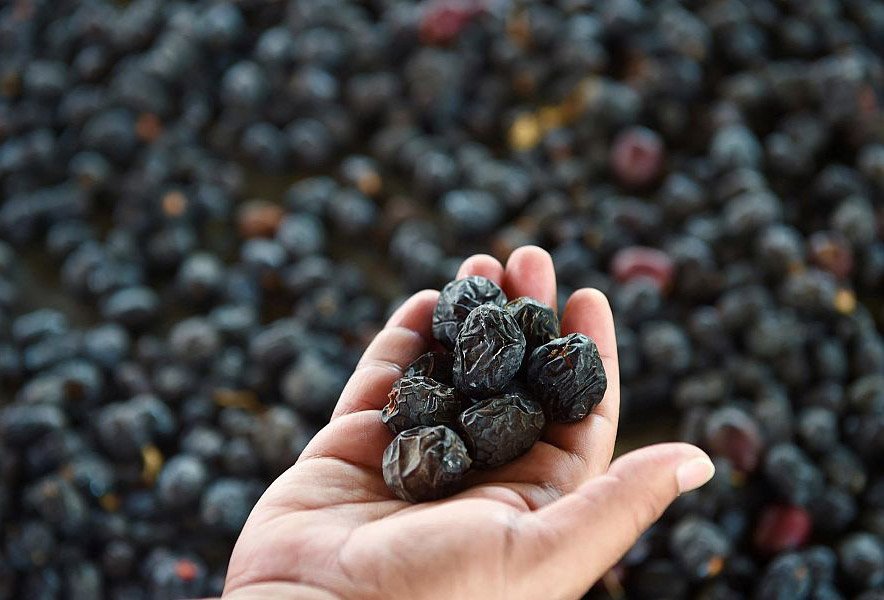
Demand for dates in Malaysia peaks before and during Ramadan. Hari Raya, weddings and hantaran, kenduri and umrah gifts are the other peaks. If you need several 1kg packs of one Ajwa grade for a wedding, check stock early. The list above already had one 1kg grade out of stock.
Breaking the fast with dates also has a hadith behind it. Sunan Abi Dawud 2356, narrated by Anas ibn Malik and graded hasan sahih by Al-Albani, records that the Prophet (ﷺ) used to break his fast before praying with some fresh dates; if there were none, with a few dry dates; and if there were no dates, with some mouthfuls of water. The hadith does not name a variety, so it applies to dates in general, Ajwa included.
Gulf and Middle-East dates are mostly harvested late summer to autumn, roughly August to November, and new-season stock reaches Malaysia some weeks later. A year printed in a pack name, such as "Ajwa A 2026", is part of the product name. Ask the seller directly if you want to know when that stock was harvested.
Using Ajwa at home
Ajwa needs nothing done to it; it is eaten straight from the pack. A few other ideas, none of them complicated:
- Split each date, take out the stone and press in an almond or half a walnut for a tray of iftar sweets.
- Chop a handful into a plain butter cake or oat cookie dough.
- Blend two or three stoned dates into a glass of cold milk.
- Put a small dish of Ajwa beside the coffee when guests come for Raya.
If you are baking in quantity, the A grade at RM31 a kilo is the obvious pick from the list above. Once the dates are chopped, nobody can see how big they were.
Questions about kurma Ajwa 1kg
Where does Ajwa come from?
Madinah, Saudi Arabia. Malaysia has no commercial date-growing trade, so every Ajwa pack here is imported.
Is Kurma Nabi the same as Ajwa?
Yes. Kurma Nabi is a market name for Ajwa.
Is a 1kg pack the cheapest way to buy Ajwa?
Not per kilo. On the list checked in November 2026, the in-stock 5kg packs worked out at RM23 and RM35 a kilo, against RM31 to RM44 for the in-stock 1kg packs. Check that the grade is the same before comparing.
Does AAA mean the same thing at every shop?
No. Grades are each importer's own size sorting. Weigh ten dates if you want to compare.
Before you order Ajwa from any kurma supplier, ask for the grade, the pack weight and the origin on the label, then work out the price per kilo yourself. More guides are in the kurma supplier section of this site. More about this site is on the About page and the contact page.